Cloudy water can make a pool look neglected even when there is no obvious algae growth. More importantly, it can signal that sanitation or circulation is falling behind. To clear cloudy pool water, the goal is not to add a random product and hope for the best. It is to identify what is suspended in the water, correct the underlying cause, and give the filtration system time to do its job.
For homeowners in western Palm Beach County, cloudiness often follows a heavy rain, a busy weekend in the pool, a stretch of extreme heat, landscaping debris, or an equipment issue that is easy to miss. The good news is that most cloudy-water problems are solvable when they are addressed methodically.
Why Pool Water Turns Cloudy
Pool water becomes cloudy when tiny particles are too small to settle quickly or be caught efficiently by the filter. Those particles might be dirt, pollen, dead algae, body oils, sunscreen residue, calcium, or contaminants introduced by rain and swimmers. Cloudiness is the visible result. The cause is usually a combination of water balance, filtration performance, and bather load.
A pool can also look cloudy when its sanitizer is being used up faster than expected. In Florida, warm water and intense sun create conditions where organic contaminants and early algae growth can consume available sanitizer quickly. The water may not turn green right away. It can first look dull, hazy, or milky.
There is no single treatment that fits every pool. A fine grey haze after a storm calls for a different response than bright blue water with a white, chalky appearance. Correct diagnosis protects your equipment, avoids wasted chemicals, and gets the water back to looking turtly clean sooner.
Start With the Filter and Circulation System
Before adjusting chemistry, make sure the pool can move and filter water effectively. A perfectly balanced pool will still stay cloudy if water is not circulating long enough or the filter is struggling to capture debris.
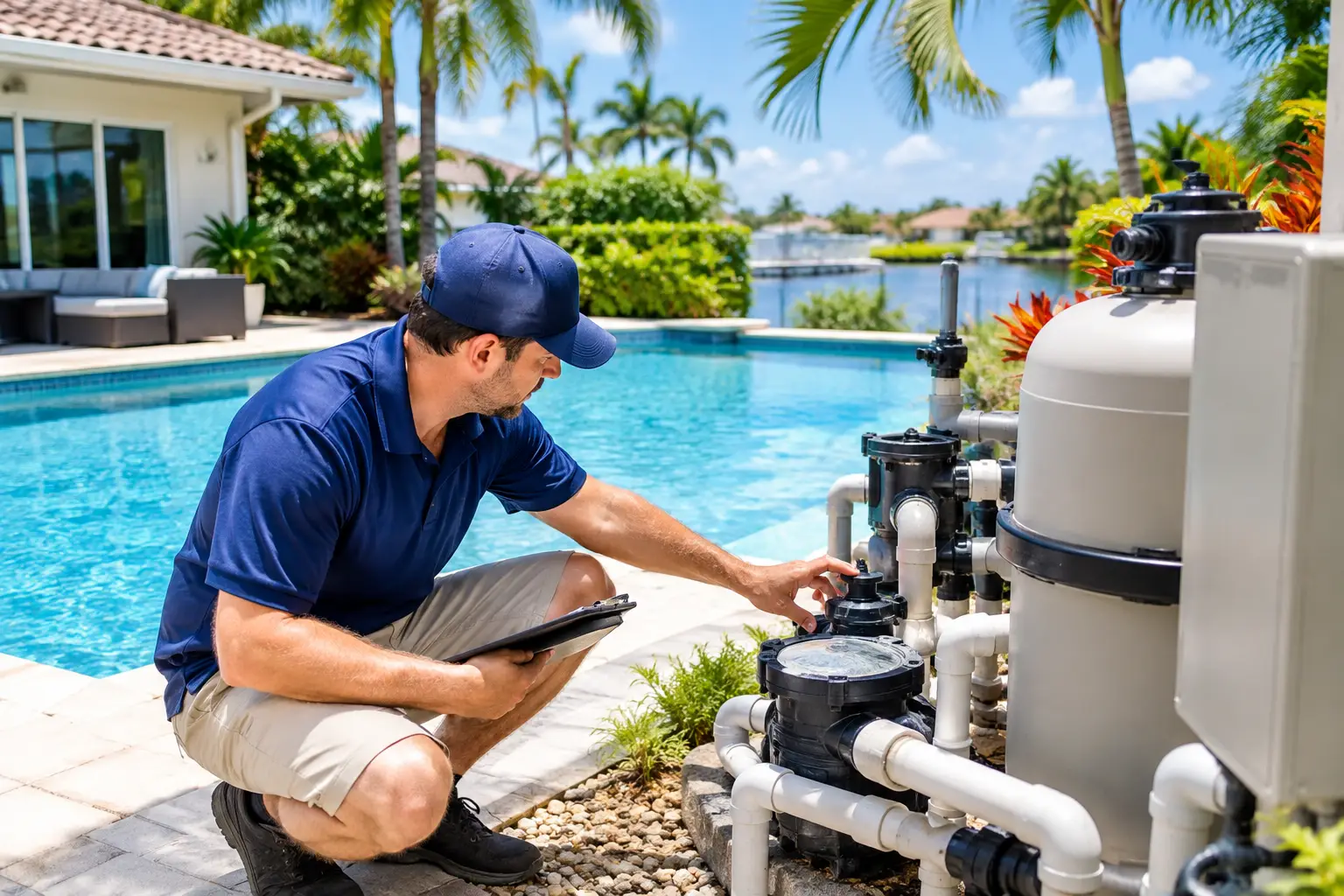
Look at the pressure gauge if your system has one, and compare the reading with the normal clean-filter pressure for your pool. A higher-than-normal reading may mean the filter needs attention. A noticeably low reading can point to restricted water flow, a suction-side issue, or a pump problem. Either condition can reduce filtration.
Check that the pump is running on an appropriate schedule and that the skimmer and pump baskets are not packed with leaves, palm material, or other debris. After storms, baskets can fill faster than many homeowners expect. Water should also be returning to the pool with a steady, visible flow from the return fittings.
Filter care depends on the system you own. Cartridge filters need periodic cleaning, while sand and DE filters have their own service requirements. Cleaning a filter too aggressively or too often can sometimes reduce its effectiveness, so it is worth following the equipment manufacturer’s guidance or having a pool professional assess the condition. A damaged cartridge, worn filter component, or improperly reassembled filter can keep a pool hazy no matter how often it runs.
Do Not Overlook Pump Performance
A pool pump does more than make the water look like it is moving. It carries debris to the filter and distributes sanitizer throughout the pool. If the pump is noisy, losing prime, leaking, shutting off unexpectedly, or delivering weak return flow, cloudiness may be an equipment symptom rather than a chemistry problem.
Variable-speed pumps can be especially efficient, but their programming still needs to match the pool’s needs. Run time and speed should account for pool size, weather, swimmer activity, and attached features such as spas or water features. A quick equipment inspection can prevent a recurring cloudy-water cycle.
Test the Water Before Adding Products
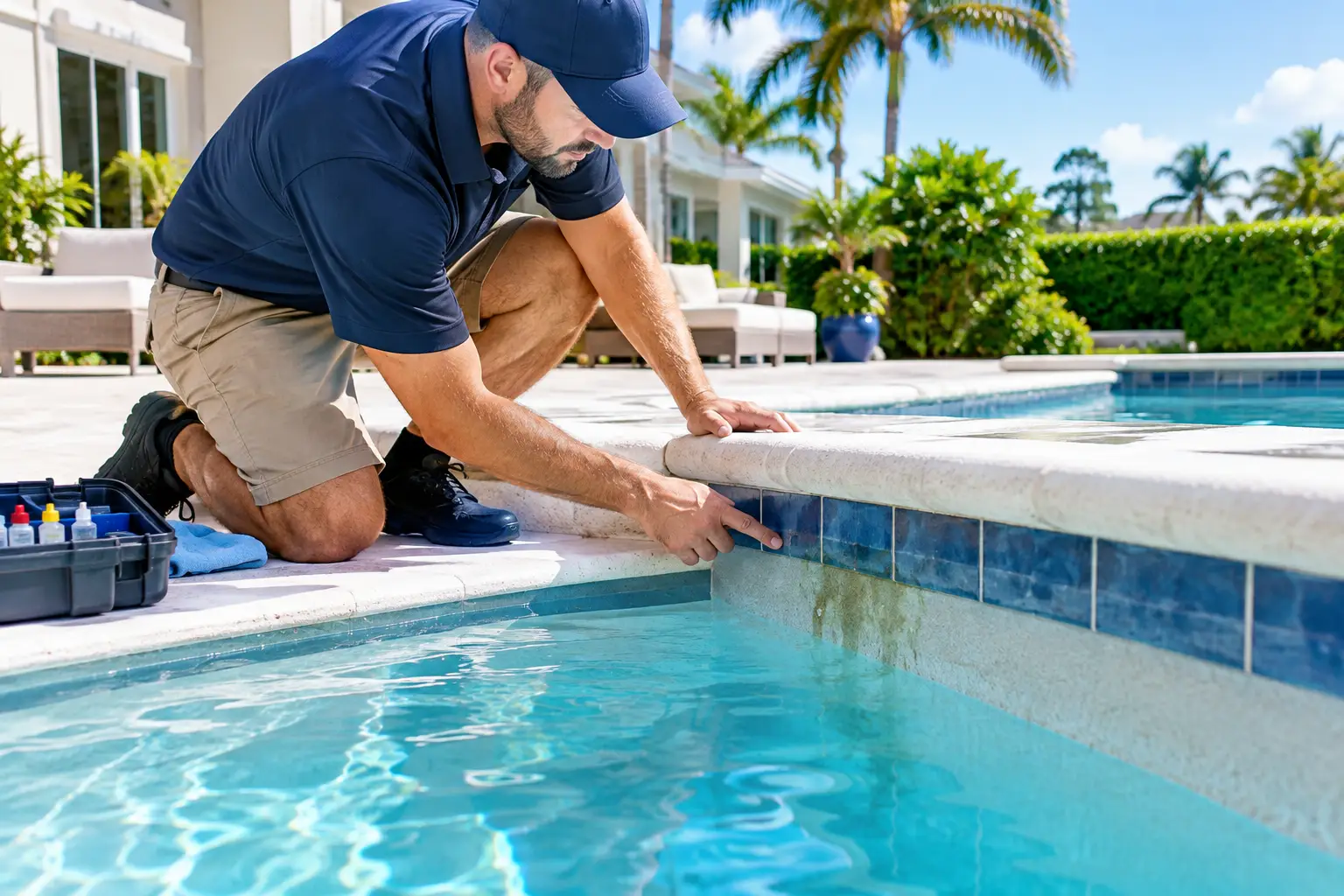
When water is cloudy, avoid treating it based on appearance alone. A complete water test gives you the information needed to make an informed adjustment. Sanitizer level, pH, total alkalinity, calcium hardness, stabiliser, and metals can all influence clarity, either directly or by affecting how well the sanitizer works.
Low or ineffective sanitizer allows contaminants to build up. pH that drifts too high can contribute to dull water and scale-forming conditions, while a significant imbalance in calcium or alkalinity can create its own clarity issues. A saltwater pool needs the same careful testing as any other pool. The salt system produces sanitizer, but it does not eliminate the need for balanced water or adequate filtration.
Use a reliable test method and follow product labels exactly. Never mix chemicals, and do not combine treatments in an attempt to speed up results. If you are unsure what the test results mean, professional water testing is the safer route. The right correction is often more modest than homeowners expect, especially when the water is only beginning to lose clarity.
Remove What the Filter Cannot Catch Yet
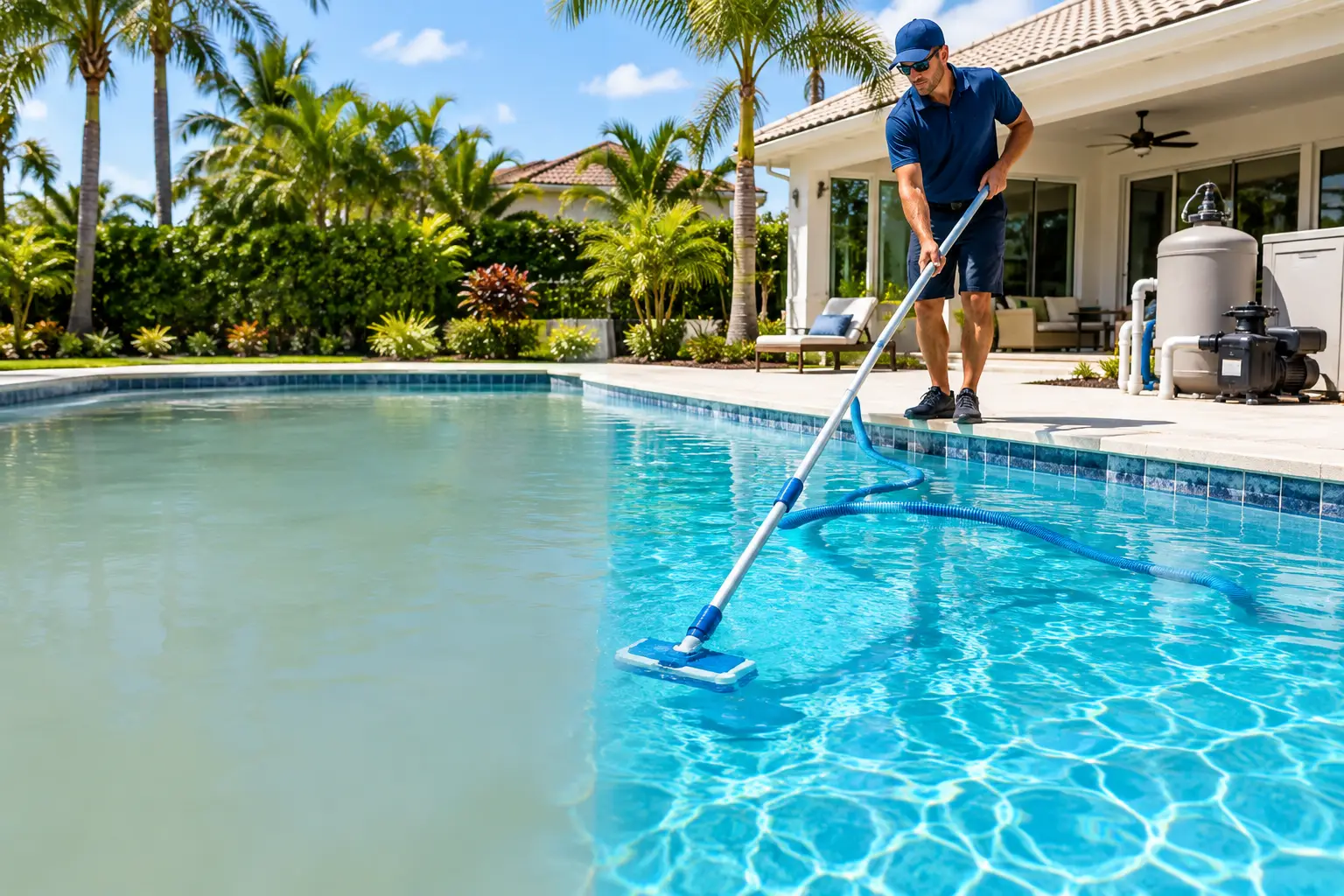
Even a healthy filter needs help when a pool has a heavy debris load. Skim leaves and floating material, brush the walls and floor, and vacuum settled debris as needed. Brushing is particularly useful because it loosens fine material and early algae growth that can cling to surfaces before becoming obvious.
Pay close attention to steps, corners, ladders, tile lines, and areas with limited circulation. These spots tend to collect oils and debris. If the floor is coated in a fine layer of sediment, vacuuming may be necessary before the water can clear. Allowing that material to remain in the pool simply gives it more chances to become suspended again.
Cloudy water after a large gathering may be mostly an organic-load issue. Sunscreen, lotions, grass, and extra swimmer use can overwhelm a pool that normally stays balanced. In that situation, thorough physical cleaning, appropriate water testing, and sufficient filtration time are often more useful than reaching immediately for multiple specialty products.
Cloudiness can be deceptive. Early algae may leave the water looking pale green, grey, or simply less sparkling than usual. It can also make walls feel slick. If brushing produces a visible cloud or the water becomes worse despite normal filtration, algae may be part of the problem and should be handled promptly with a chemistry plan based on test results.
Milky white water can sometimes indicate calcium precipitation or another balance issue. This is more likely when the water has been out of balance, after a new finish or resurfacing, or following an inappropriate chemical adjustment. Metal-related discoloration can create a different look, including tea-colored, greenish, or rusty tones. These cases require more than routine skimming and should be assessed carefully before adding a clarifier or other treatment.
Clarifiers and flocculants have a place, but they are not universal fixes. Used correctly, they can help fine particles gather so they can be filtered or removed. Used when the root cause is poor circulation, algae, or a balance problem, they can add expense without resolving the issue. Some treatments also require specific vacuuming or filter procedures, which is why instructions and pool type matter.
Give the Pool Time to Recover
Clear water does not always return within a few hours. Once the source of the cloudiness has been corrected, the pool needs uninterrupted circulation and a clean, functional filter to remove fine particles. Check progress daily rather than continuously changing the treatment plan.
If the water is improving, keep the system operating as intended and stay consistent with cleaning and testing. If it is not improving, or if it turns green, develops a strong chemical odour, or makes the bottom difficult to see, it is time for a closer evaluation. A pool with limited visibility should not be used until the water is clear and properly balanced.
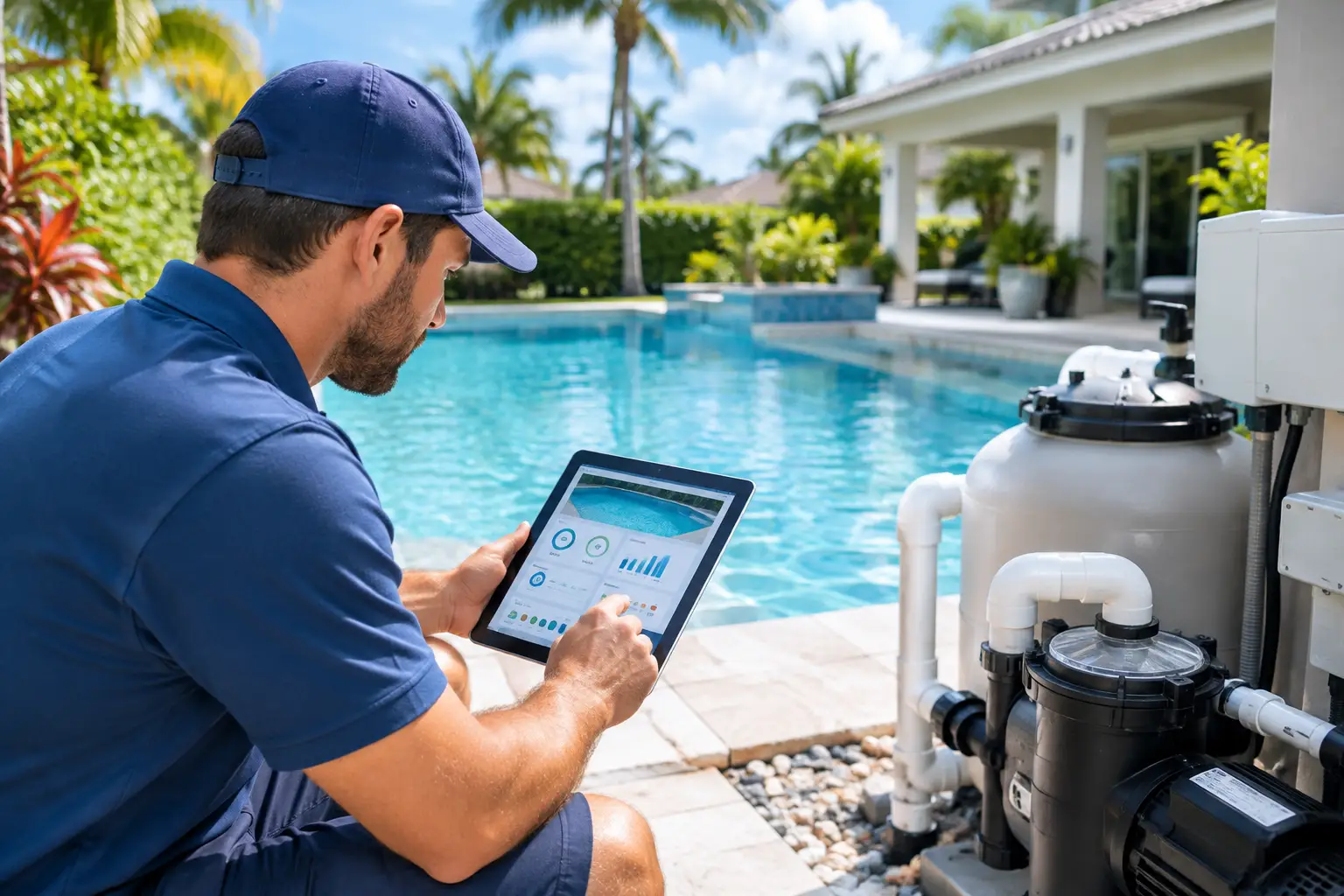
For recurring issues, detailed service records are valuable. Notes on test results, filter cleanings, weather events, equipment behavior, and prior treatments can reveal a pattern that one-off fixes miss. Turtle Pool Care provides digital visit reports and photos because homeowners deserve to know what was checked, what was completed, and what needs attention next.
A clear pool is built through steady care, not guesswork. When the water loses its sparkle, treat it as an early reminder to check circulation, filtration, and chemistry together. Addressing a small haze promptly is often the simplest way to protect your pool, your equipment, and your family’s peace of mind.