A saltwater pool can look perfectly clear while its chlorine generator is quietly working harder than it should. In western Palm Beach County, warm water, long pump run times, and naturally hard fill water can all encourage mineral scale inside the salt cell. Salt cell cleaning can restore chlorine production when scale is truly the problem, but cleaning too often can shorten the life of an expensive piece of equipment.
The goal is not to clean a salt cell on a schedule just because the calendar says so. The goal is to inspect it, understand what the pool is telling you, and address buildup only when it is present. That approach protects your equipment, keeps chlorine production steady, and helps maintain water that feels safe, comfortable, and turtly clean.
What a salt cell does for your pool
A saltwater pool still uses chlorine. The difference is that the salt cell uses a low concentration of dissolved salt and electricity to generate chlorine as water passes through the plumbing. That chlorine sanitizes the pool, then returns to salt after it has done its job. It is a practical system, but it depends on balanced water and good circulation.
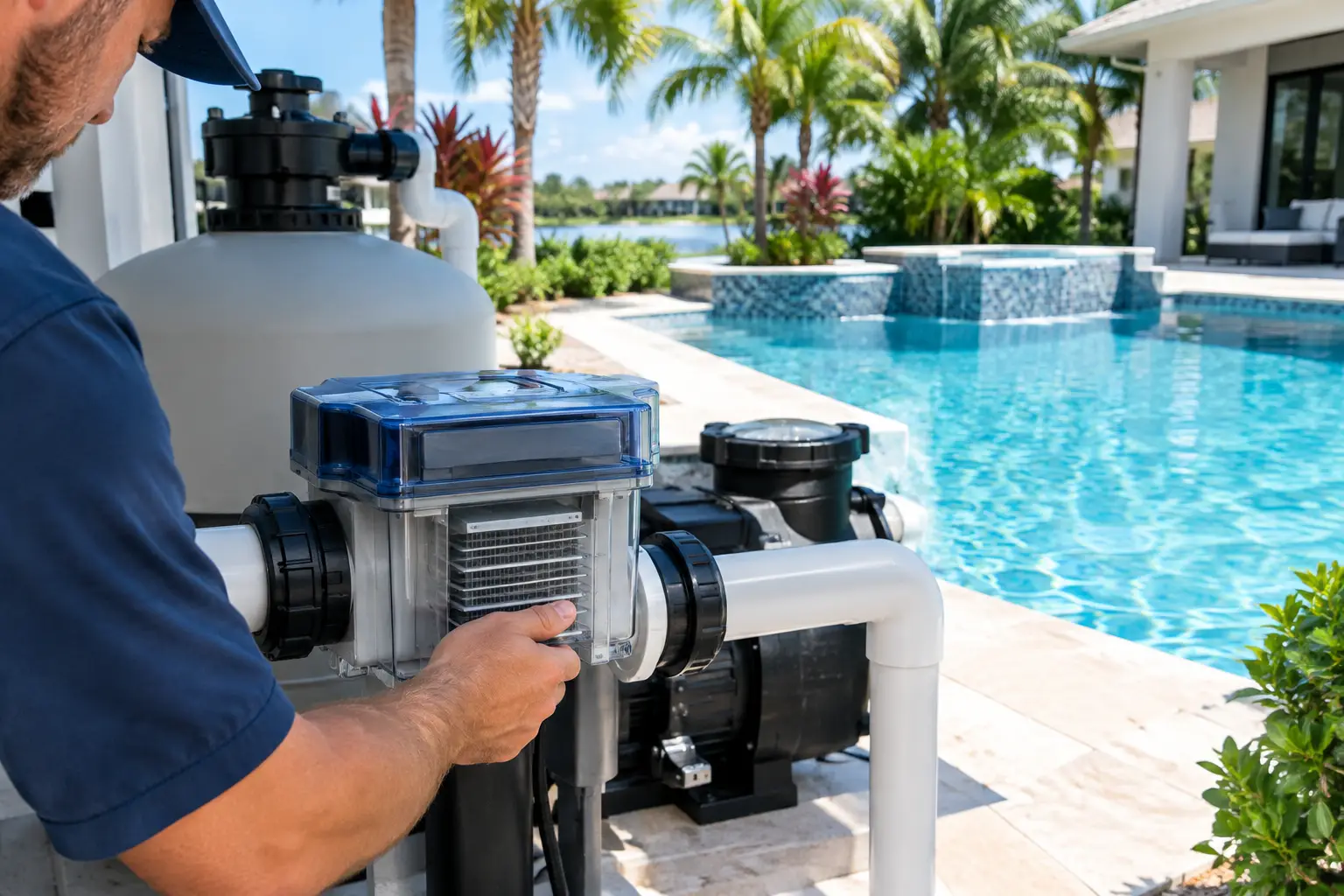
Inside the cell are coated metal plates. As the generator operates, calcium can collect on those plates, especially when the water has a higher calcium hardness level, elevated pH, or warm temperatures. A light dusty film may not affect performance right away. Heavier white or gray crust can block water flow through the cell and reduce its ability to make chlorine.
That is why a low-chlorine reading does not automatically mean the cell needs cleaning. Low salt, an incorrect output setting, insufficient daily pump time, aging cell plates, poor water balance, or a circulation issue can create similar symptoms. A proper inspection keeps homeowners from treating the wrong problem.
Signs salt cell cleaning may be needed
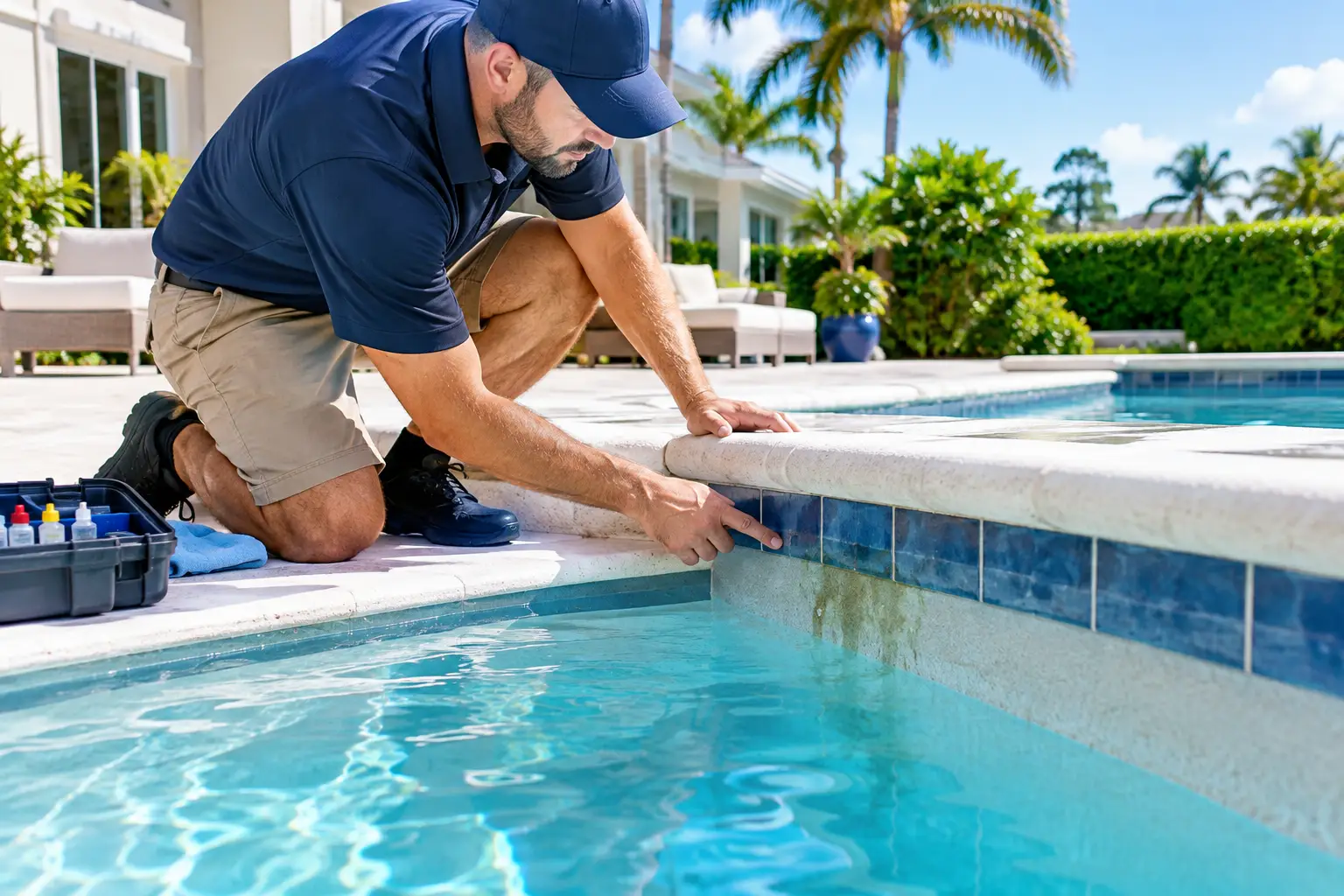
The most obvious sign is visible scale when the cell is inspected. If you can see hard, chalky deposits bridging the plates or narrowing the openings, the buildup deserves attention. Many salt systems will also show a warning message or an indicator related to low flow, low salt, or cell performance, although those alerts are not always a direct diagnosis.
You may also notice that the pool is not holding its normal chlorine level even though the generator setting has not changed. Before assuming the cell is at fault, check the basics: water test results, stabilizer level, salt level, pump operation, filter condition, and actual daily run time. In Florida heat, a pool can need more chlorine simply because swimmers, sunlight, rain, and warmer water are placing a heavier demand on it.
A professional visual inspection is especially worthwhile if the generator is several years old. Cells do not last forever. Their coating gradually wears away during normal operation, and a clean-looking cell can still be near the end of its service life. Cleaning cannot restore depleted cell plates, so honest diagnosis matters.
Why overcleaning is a costly mistake
Many manufacturers allow a diluted acidic cleaning solution for mineral scale, but acid is not gentle on the cell itself. Each acid wash removes scale, yet repeated or unnecessarily strong cleaning can also wear down the specialized coating on the plates. Once that coating is damaged or depleted, the cell produces less chlorine and ultimately needs replacement.
For that reason, a cell should never be acid-cleaned as routine monthly maintenance. Inspection is routine maintenance. Acid cleaning is a targeted response to confirmed mineral buildup that cannot be removed by a simple rinse or gentle flushing.
There is also a homeowner safety concern. Pool acids can cause burns, release irritating fumes, and damage nearby surfaces or equipment if handled incorrectly. The cell must be removed only after the system is powered down and isolated properly, and the cleaning solution must be mixed, used, and disposed of correctly. This is a good task to leave to a trained pool professional, particularly when the cell is heavily scaled or the equipment pad has other issues.
A better approach to salt cell care
The best salt cell cleaning plan begins with prevention. Water chemistry that is consistently managed is less likely to create stubborn scale in the first place. pH is particularly important because it tends to rise in saltwater pools as the system operates. When pH stays elevated, calcium is more likely to come out of solution and attach itself to the cell.
Calcium hardness, total alkalinity, salt concentration, cyanuric acid, and water temperature all influence scaling potential too. There is no single perfect reading that applies to every pool, which is why pool chemistry should be evaluated as a complete picture rather than adjusted one number at a time.
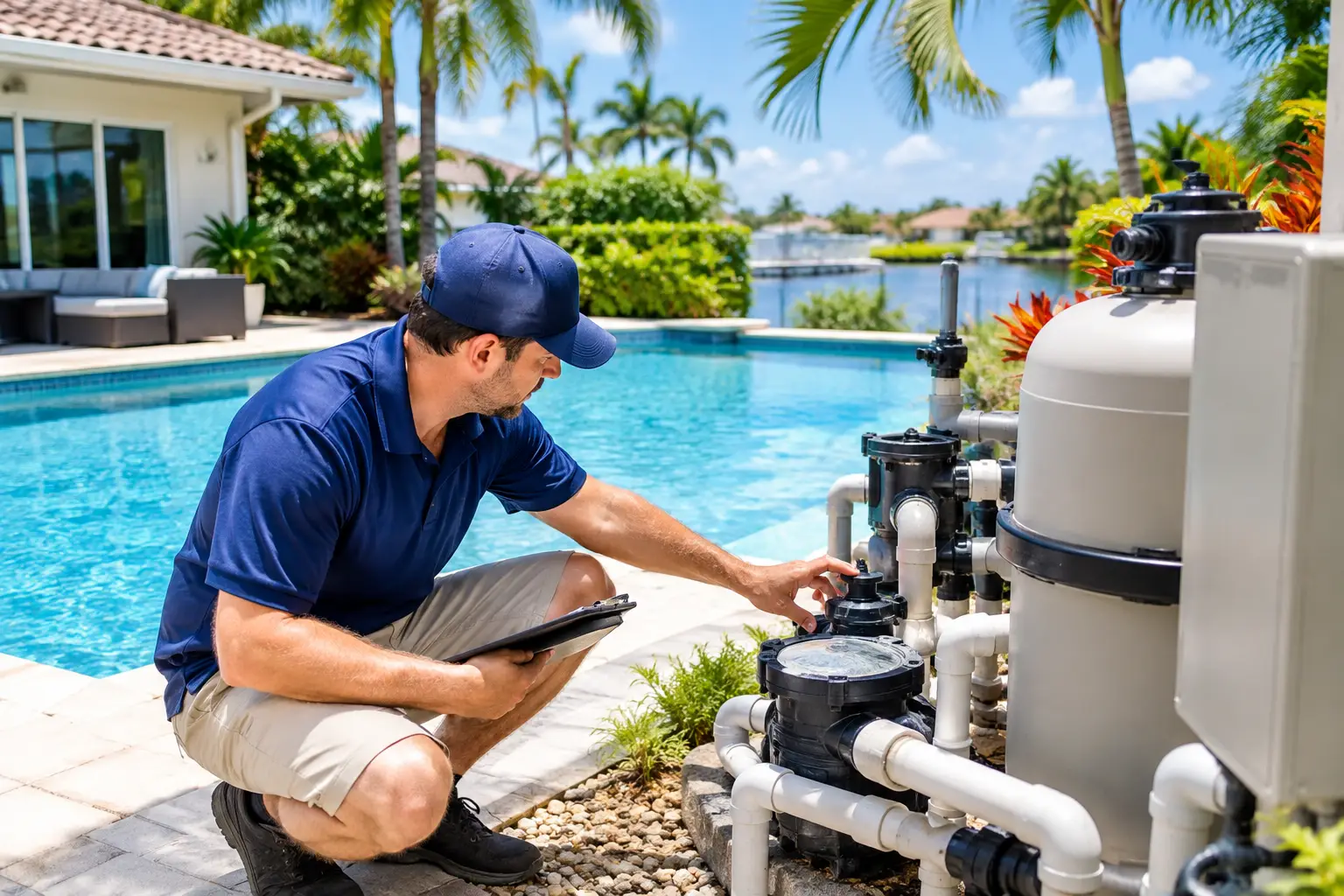
Good circulation also supports the generator. A clean filter, a properly operating pump, adequate water level, and correct valve positions help the cell receive the flow it needs. If the pool has a variable-speed pump, its programmed schedule should provide enough circulation during the hours when chlorine demand is highest. Running the pump longer is not always the answer, but a schedule that is too short can leave the generator without enough time to do its job.
For most residential pools, periodic cell inspection is far more useful than automatic cleaning. The ideal interval depends on the pool's water balance, bather load, source water, and the type of salt system installed. A pool with persistent high calcium hardness may need closer attention than one with balanced water and little visible scale.
What a professional inspection should include
A thorough salt-system check goes beyond looking inside the cell. It should include testing the pool water, confirming the salt reading with reliable equipment, checking the generator's settings and warning indicators, and verifying flow through the equipment. The cell itself should be inspected for scale, damaged plates, and signs of age.
If cleaning is needed, the technician can remove the cell safely, use the appropriate method for the amount of buildup, and reinstall it correctly. Just as important, they can identify why the scale developed. Without correcting the chemistry or circulation condition behind the buildup, the same problem is likely to return.
At Turtle Pool Care, weekly service includes water testing, chemical balancing, and routine visual equipment inspection, helping small salt-system concerns get noticed before they become a no-chlorine weekend. Detailed digital reports and visit documentation also give homeowners a clearer picture of what was checked and what their pool needs next.
When cleaning will not solve the problem
A salt cell with no meaningful scale may still produce too little chlorine. Sometimes the issue is a failing flow sensor, a worn-out cell, low water temperature, a power or control problem, or a pump that is not moving enough water. In other cases, the cell is functioning normally but cannot keep up with algae, heavy debris, high swimmer use, or a chemistry imbalance.
Adding more salt without testing is not a fix. Too much salt can create its own problems, and generator readings may not always match the actual salt level in the water. Likewise, turning the output to 100 percent can mask a problem temporarily while making the cell work harder than necessary.
If chlorine is low, the safest path is to test the water, inspect the equipment, and determine whether the pool needs adjustment, cleaning, repair, or a recovery treatment. A clear diagnosis protects both the pool and the budget.
A salt cell is easiest to care for when it is treated as part of the whole pool system, not as a separate appliance. Keep the water balanced, give the pump enough circulation time, inspect before cleaning, and let visible scale - not guesswork - guide the next step. That is how a saltwater pool stays comfortably clean without asking more of its equipment than it should.