A pool can look perfectly fine on Friday and take on a green tint after one hot, rainy weekend. If you have searched “why pool water green,” the short answer is usually algae. The more useful answer is that algae gained an opportunity - often because sanitizer, circulation, filtration, or water balance slipped out of range.
Green water is not something to ignore or simply cover up with extra chlorine. The shade of green, the speed at which it appeared, and the condition of your equipment all provide clues. A clear plan protects the pool surface, helps avoid wasted chemicals, and gets your backyard back to feeling turtly clean.
Why is pool water green in the first place?
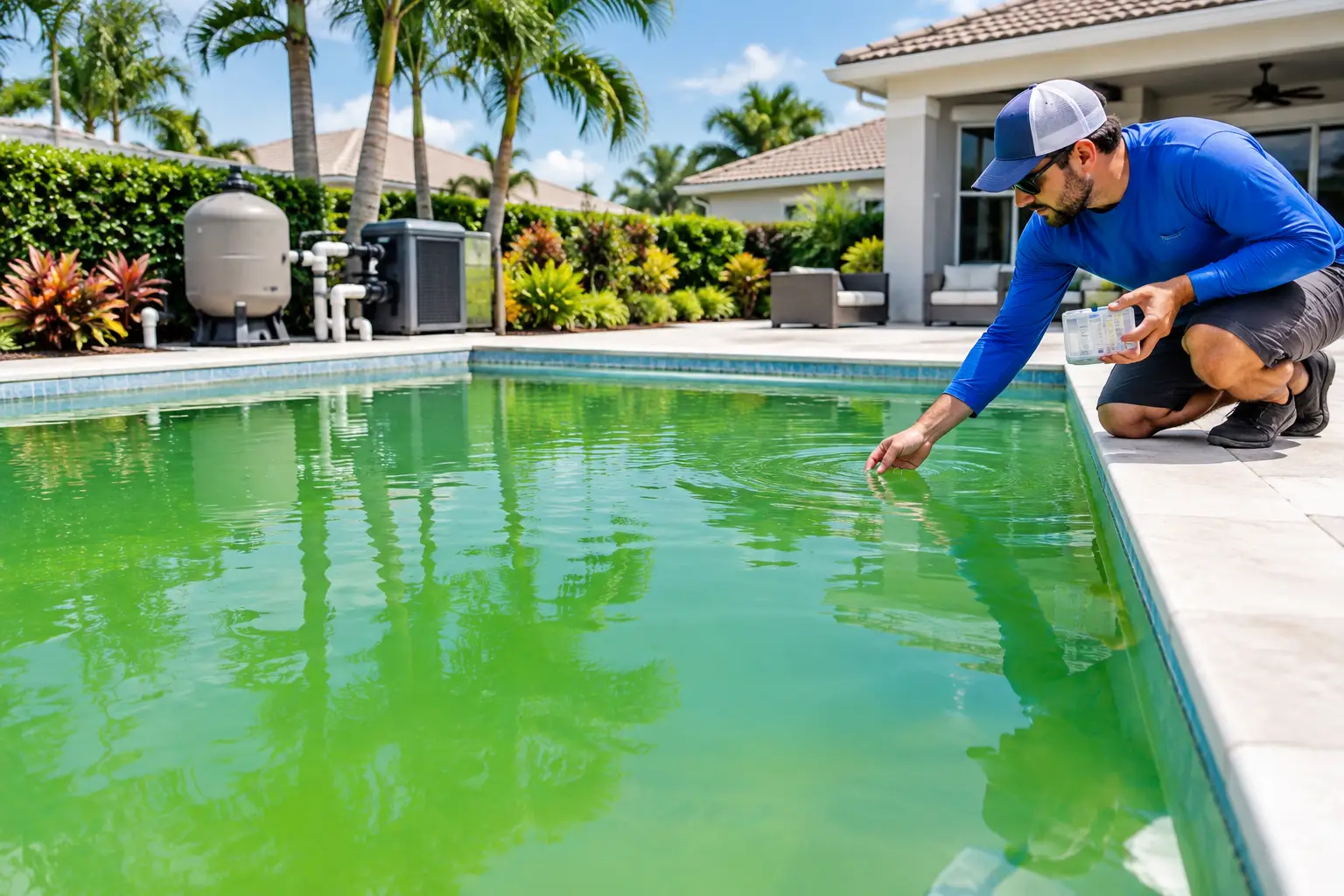
In most residential pools, green water is caused by algae growth. Algae spores are always finding their way into the water through wind, rain, swimmers, landscaping, and debris. They become visible when the pool no longer has enough active sanitizer to keep them under control.
Florida heat speeds up the process. Warm water, bright sun, afternoon rain, and a busy pool can consume chlorine quickly. If circulation is weak or the filter is dirty, algae has even more favorable places to grow. It may begin as a faint haze, then turn the water pale green, emerald green, or dark and cloudy.
Not every green pool is an algae pool, however. Metals in the water can also cause a green tint, especially after adding chlorine or making a substantial chemistry adjustment. Copper is the usual culprit. It may come from source water, certain pool chemicals, or deterioration in equipment. Unlike algae, metal-related discoloration can appear while the water remains relatively clear.
That distinction matters. Treating a metal issue like a severe algae outbreak can make the discoloration harder to manage, while treating algae too gently lets it continue to spread.
The most common causes of green pool water
Low or ineffective sanitizer
Chlorine is not just a number on a test strip. Its effectiveness depends on the rest of the water chemistry, particularly pH and cyanuric acid, often called stabilizer. A pool may show chlorine on a basic test yet still lack enough effective sanitizer to prevent algae.
High stabilizer can make chlorine less active, which is a common challenge in sunny climates where stabilized products are used repeatedly. On the other hand, too little stabilizer allows sunlight to burn through chlorine rapidly. Saltwater pools are not exempt either. They still rely on chlorine production, and a salt system that is undersized, dirty, incorrectly programmed, or not running long enough can leave the pool unprotected.
Poor circulation or a filter problem
A pool pump and filter do more than move water. They carry sanitizer through the pool and remove the fine material that makes water look dull or cloudy. When circulation is interrupted, algae often starts in low-flow areas: steps, corners, behind ladders, along the waterline, and near return fittings.
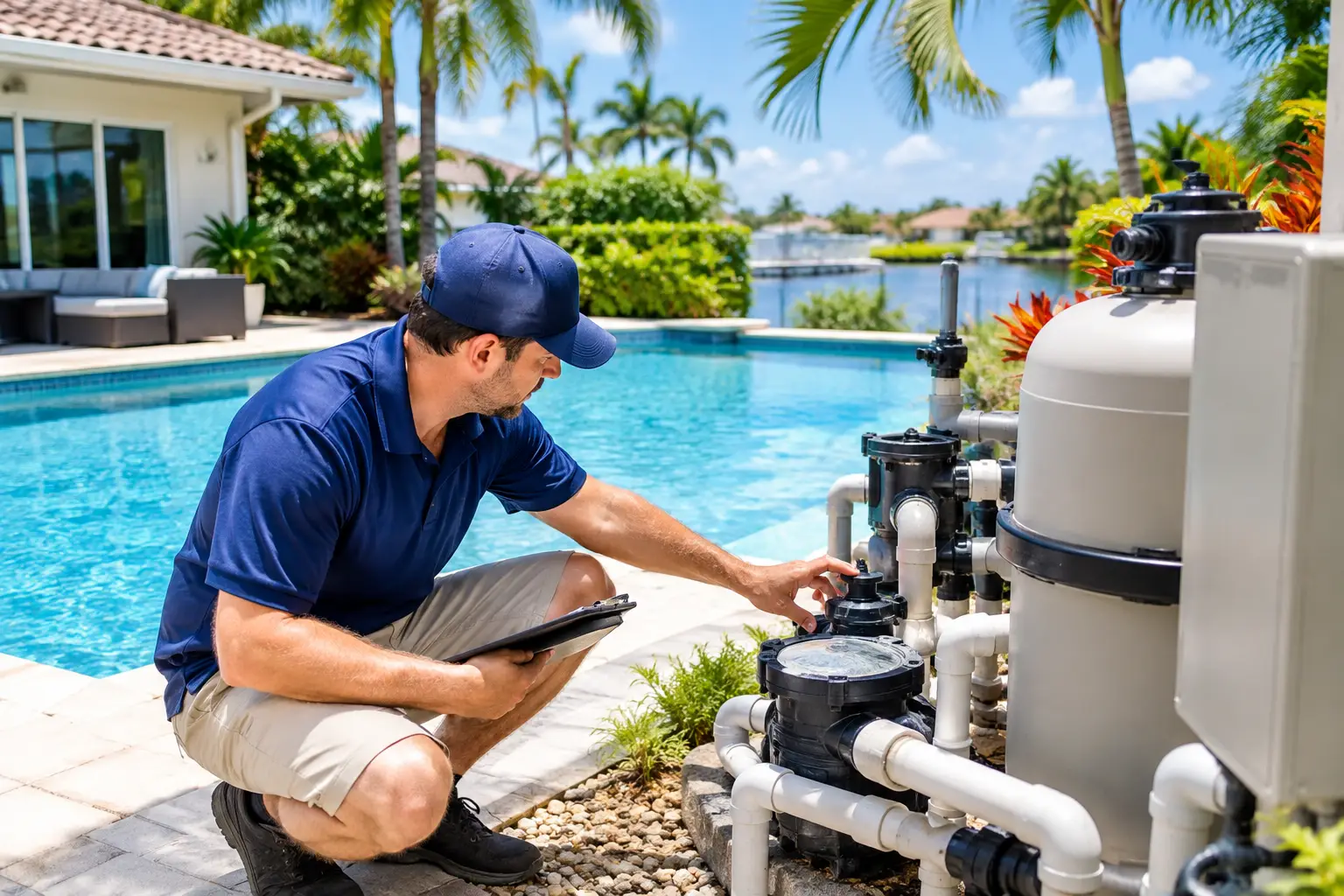
A pump that is not running long enough may be part of the problem, but so can a clogged filter, blocked skimmer basket, worn pump component, air leak, closed valve, or a circulation pattern that leaves dead spots. If the water turns green repeatedly despite regular chemical additions, equipment performance deserves a closer look.
Rain, debris, and heavy pool use
Rainwater can dilute sanitizer and introduce contaminants. Leaves, pollen, grass clippings, and soil create extra demand on the water chemistry as they break down. A pool party adds sunscreen, body oils, sweat, and more organic material than a quiet week of swimming.
None of these events automatically turns a pool green. The trouble starts when the pool does not receive the brushing, filtration, and chemistry correction needed afterward. This is why a consistent weekly service routine is preventive care, not just cosmetic cleaning.
Imbalanced pH and other water conditions
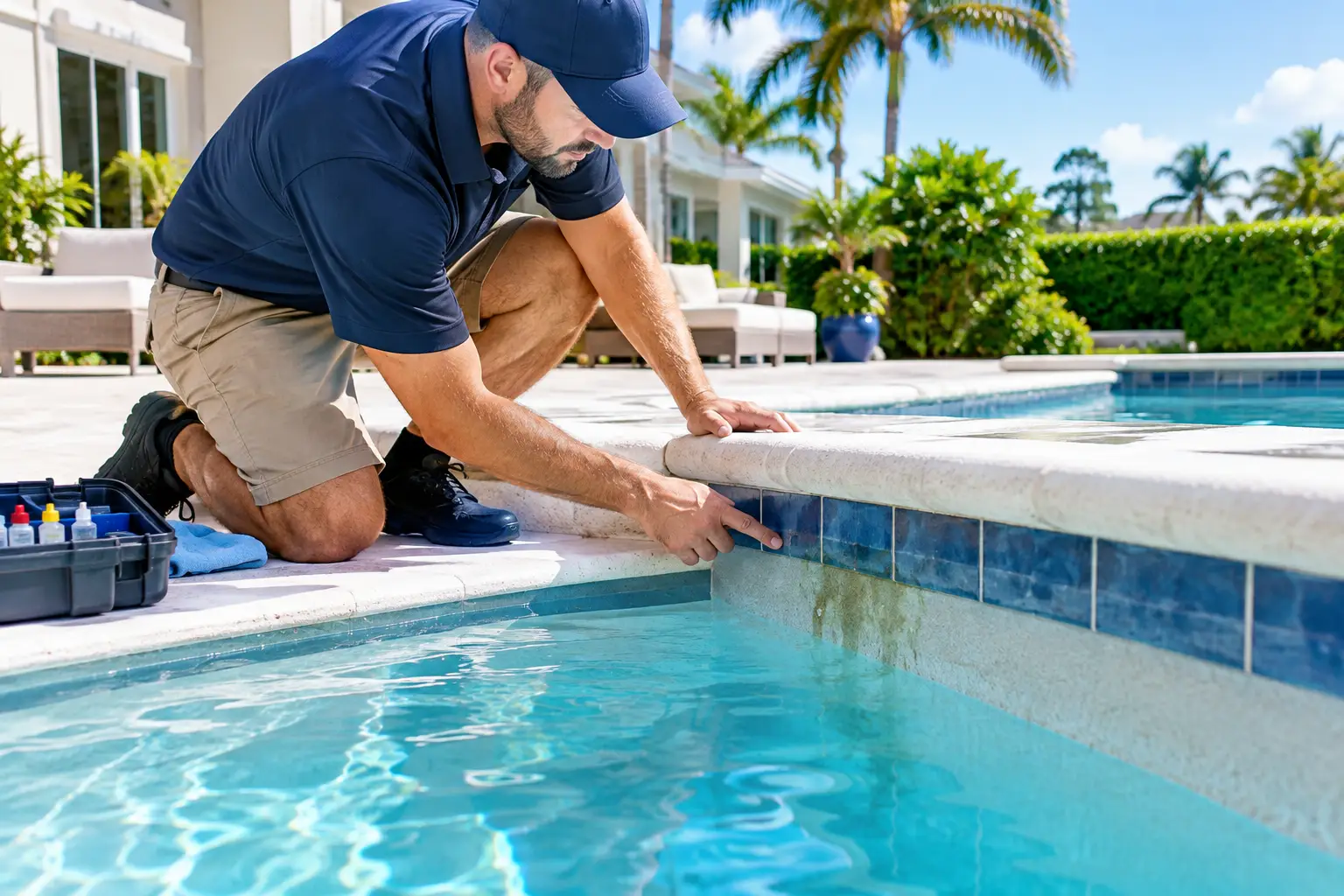
When pH rises too high, chlorine becomes less efficient. High pH can also contribute to cloudy water and scale, creating a rough surface where algae can gain a foothold. Low pH has different risks, including corrosion and discomfort for swimmers.
Phosphates are sometimes discussed as the cause of algae. They are better understood as a food source rather than the spark. Removing them may be appropriate in some cases, but it will not replace maintaining proper sanitizer and circulation. The pool must first have enough active chlorine to stop the growth.
Metals, especially copper
If the water becomes green soon after chlorination but remains transparent, metals should be considered. Copper can also leave blue-green staining on surfaces, fittings, hair, or light-colored swimsuits. This situation calls for accurate water testing and a measured treatment plan, rather than guessing with several chemicals at once.
Look at both the color and clarity. Algae usually makes the water cloudy, hazy, or increasingly opaque. Walls and steps may feel slippery, and brushing can reveal green dust or clumps. The filter may need more frequent attention as it captures dead algae during cleanup.
Metal discoloration often leaves the water clear enough to see the floor, even though it looks green or green-blue. It can occur suddenly after a chemical addition. Of course, pools can have more than one issue at the same time. A professional water test is the quickest way to avoid treating the wrong condition.
What to do when your pool turns green
Start by keeping swimmers out if you cannot clearly see the main drain or pool floor. Visibility is a safety issue, and green water can contain algae, bacteria, and debris that should not be ignored.
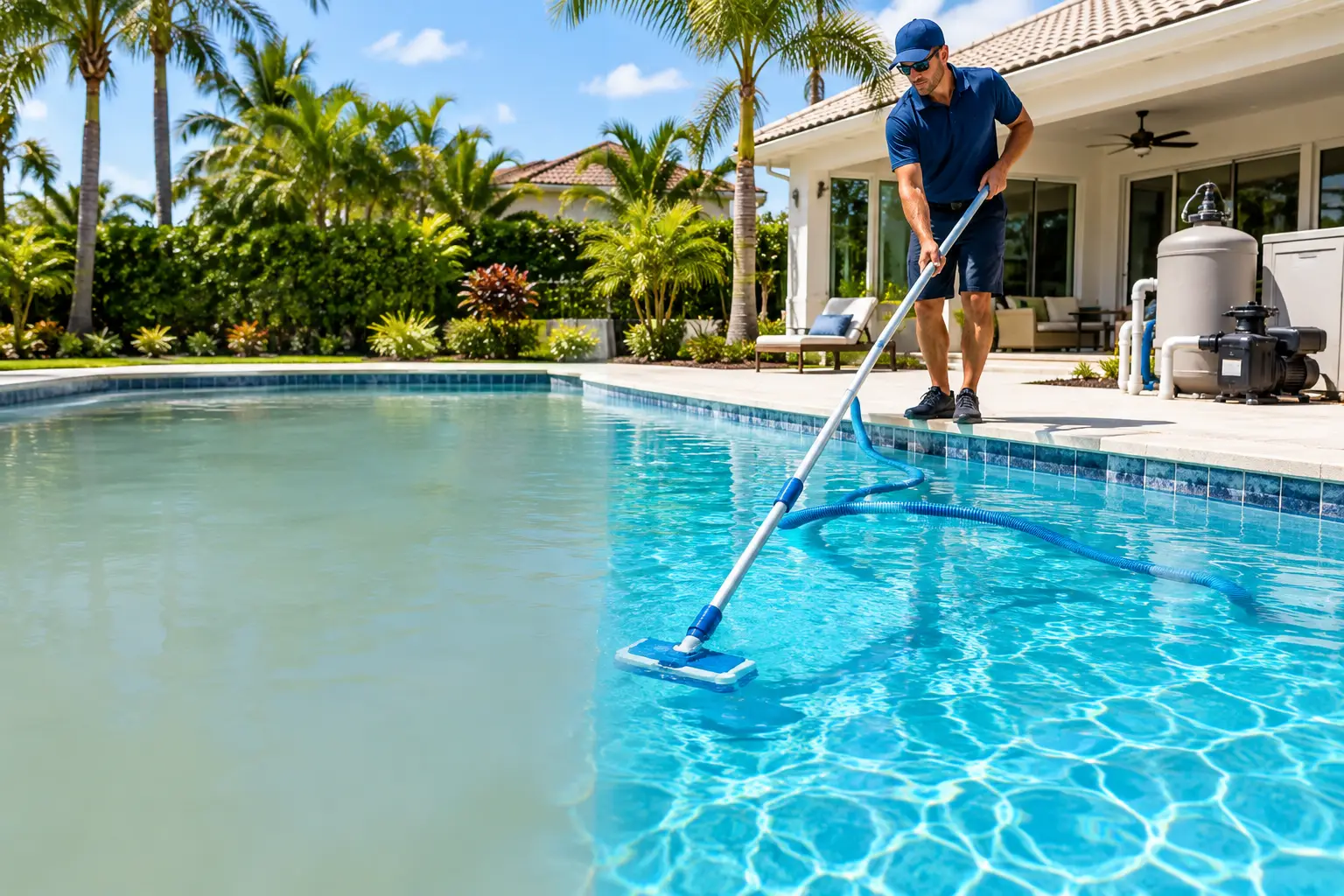
Remove leaves and other large debris, empty baskets, and inspect whether the pump is running normally. Brush the walls, steps, and floor to disturb algae and help the sanitizer reach it. Then test the water thoroughly. A complete test should look beyond chlorine and pH to include stabilizer, alkalinity, calcium hardness, and metals when the appearance suggests it.
The right correction depends on those results. An algae recovery commonly requires restoring chemistry, applying the appropriate sanitizer treatment, brushing, and running the circulation system long enough to filter out what is killed. The filter must be cleaned or backwashed as needed so it can continue doing its job. One dose of product is rarely the whole answer for a pool that has become deeply green.
Avoid mixing chemicals, adding products blindly, or pouring different treatments together. Pool chemicals need careful handling, and the wrong sequence or amount can damage surfaces, cloud the water further, or create an unsafe situation. Electrical or pump repairs should also be left to a qualified pool professional.
Why green water sometimes comes back
A pool that clears briefly and turns green again is sending a message. The treatment may have addressed the visible algae without correcting the reason it took hold. Common underlying issues include a filter that needs service, insufficient daily circulation, high stabilizer, an underperforming salt cell, a pump problem, or a persistent water-balance issue.
This is where documented, routine pool care makes a real difference. Tracking water readings over time helps identify patterns that a single test can miss. A detailed service report can show whether chlorine demand is climbing, whether the filter is repeatedly under pressure, or whether an equipment concern needs attention before it becomes a green-water emergency.
For homeowners in Wellington, Royal Palm Beach, Westlake, and nearby communities, seasonal weather can make consistency especially valuable. Heavy rain and summer heat do not wait for a convenient time to challenge pool chemistry.
Keeping your water clear after recovery
Once the pool is clear, regular skimming, brushing, vacuuming as needed, balanced chemistry, and dependable circulation are the best defense. Keep landscaping debris out of the pool where possible, clean baskets before they restrict flow, and pay attention to changes in water appearance or equipment sound.
A clear pool should not require constant second-guessing. Turtle Pool Care combines weekly hands-on maintenance with water testing, equipment awareness, and digital visit documentation so homeowners know what was done and what needs attention. When the water starts to shift from blue to green, acting early is usually simpler, safer, and far less disruptive than waiting for a full recovery.